 (800) 571-GMRS (4677)
Radios for Churches
Like every organization, churches need reliable communication to coordinate essential functions.
Cell Phones: Many churches consider using them because they are ubiquitous (almost everyone has one). But the lack of instant one-to-many communications makes cell phones impractical and inefficient.
FRS Radios: Because of their low cost, many worship communities fall back on cheap “blister-pack” (aka “toy radios”) from sporting goods stores and big box retailers. Because virtually anyone can buy those, it’s possible for bad actors to use them to monitor the activities of an organization’s personnel in order to plan or coordinate an attack.
The best option: Reliable Analog or Digital commercial two-way radios (otherwise known as “business radios”, named for the FCC-authorized radio band in which they operate) are more secure than FRS radios and more efficient than cell phones.
Radios Across America LLC provides many brands and models of commercial two-way radio equipment to satisfy any communication need your congregation may have, as well as providing expert consultation on operational efficiency and best practices. We also explain FCC requirements and assist in obtaining the required FCC License for these systems.
Various technologies are available for your church, depending on its needs. Please read about one of the options below to learn more.
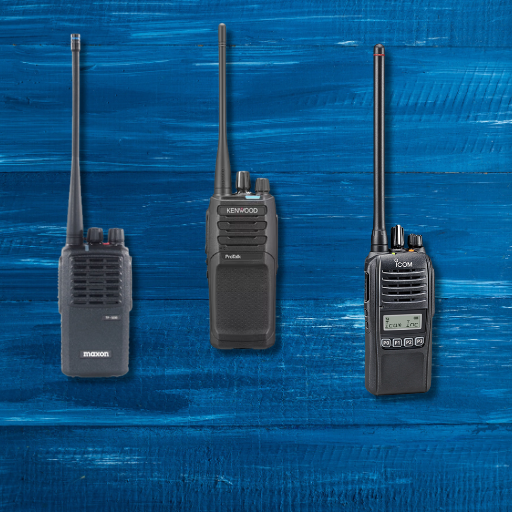
Analog Radios
Analog radios are the simplest, most widely deployed and most cost-effective type of commercial radio. With higher power levels than FRS radios provide, better penetration and longer distances are guaranteed. For smaller campuses, simplex (direct) communication is sufficient, but ALL the radios on this page can easily be programmed to operate through repeaters to extend their range to serve much larger communities. Analog radios are compatible with ALL OTHER Analog radio, no matter the brand. Call us at 800-571-4677 to schedule a free consultation.
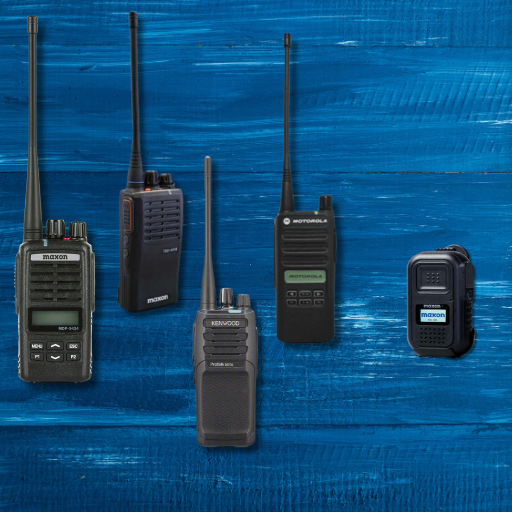
DMR/Analog Radios
DMR stands for “Digital Mobile Radio” and is the most popular DIGITAL format in modern two-way radio systems. The best thing that can be said about DMR is that it’s more secure than analog. Another benefit is that you get two “talk paths” within the same “footprint” that Analog radios consume, allowing two separate conversations on the same frequency. ALL digital radios can also be programmed to operate in Analog mode, so if you have older Analog radios which need to communicate with your DMR radios, a little programming can make that happen. Please call us at 800-571-4677 to discuss.
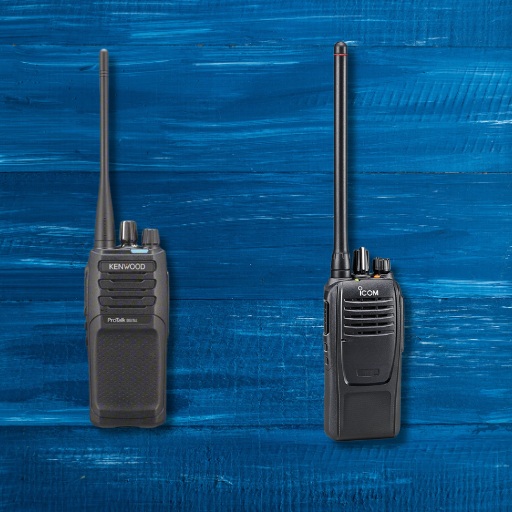
NXDN/Analog Radios
NXDN is the acronym for “Next Generation Digital Narrowband”. What this new technology does for you is it allows your radio system to operate on the frequencies between the regular 12.5kHz channels. NXDN radios operate using digital technology that many scanners cannot receive. The additional security which NXDN provides makes these radios more impervious to being scanned using an ordinary police scanner, thereby limiting the possibly that others can intercept your communications for nefarious purposes. Call us at 800-571-4677 to learn what NXDN can do for your organization.
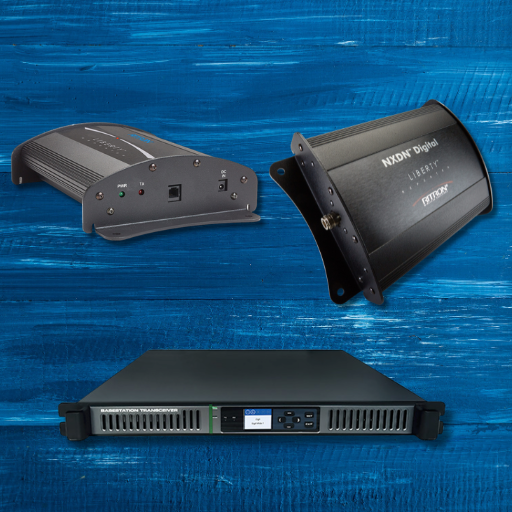
Repeaters
A Repeater is needed when direct radio-to-radio communications (“simplex”) is impractical because of the size of your campus or difficulty with penetration in and out of buildings. Concrete and steel block radio signals to a certain extent. The repeater makes up for those issues by receiving your signal on one frequency and retransmitting it with higher power on a different frequency (the “repeater pair”) through a high gain antenna positioned at a high location like a rooftop. Radios access the repeater by being programmed for the repeater pair in one or more of the radios channel locations. The repeater is connected to the antenna via a duplexer, a device that separates the receive and transmit signals and allows them to simultaneously travel down the same coax cable. The amount of range a user can expect from a repeater is dependent upon the antenna height, the repeaters power and the “gain” of the antenna. Please call Radios Across America to learn more about radio systems in general and/or repeaters in specific. Our toll free number is (800) 571-4677.
About FCC Licensing
Other than MURS (Multi-Use Radio System) and 900 MHz ISM, all commercial and business two-way radio systems require an FCC Authorization (aka FCC License) to operate. Whether you are using a repeater or just simplex, a license is necessary because one requirement for obtaining a license is frequency coordination to prevent channel congestion. Churches, in the eyes of the FCC, are considered the same as businesses within Part 90 of the FCC regulations. Non-profit organizations can apply for a discount on the FCC License Fees, so when applying for a license, be sure to mention your non-profit status.
Radios Across America LLC assists all our customers with applying for their FCC License. Here are some articles you may find helpful:
Why Do Business Radio Users (and Churches) Need an FCC License to Operate Their Radio Systems?
5 Reasons Why Businesses (or Churches) Should Never Use FRS Radios
Please give us a call at (800) 571-4677 or send an email through our contact us form to set up a consultation or just get more information.